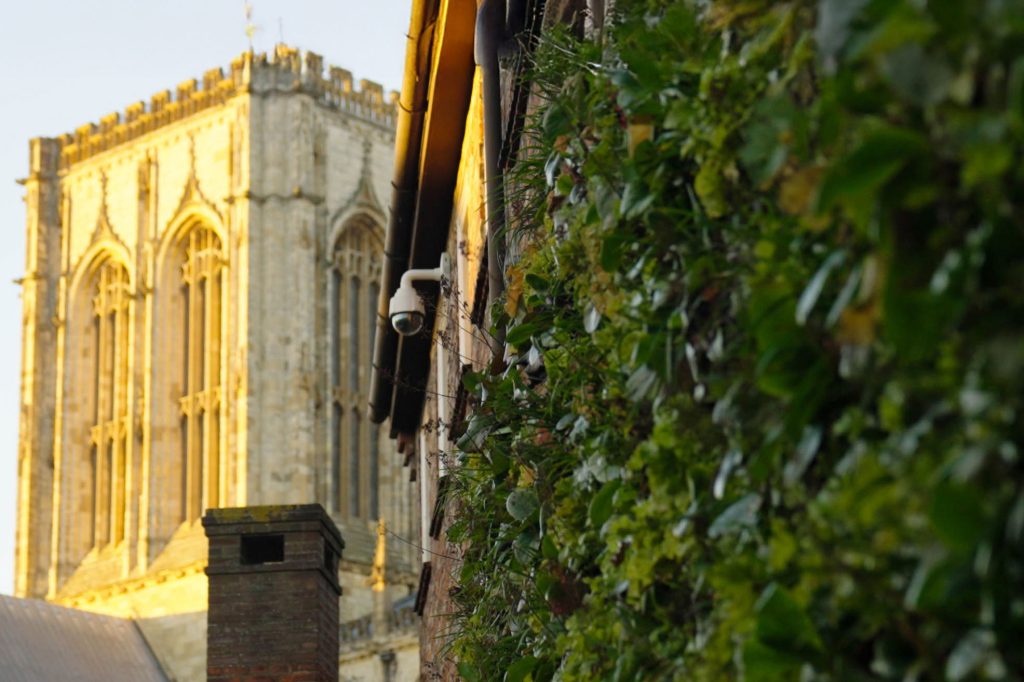
External living walls transform blank walls and hard-built spaces by bringing in real planting, colour and texture. We design and install walls for commercial buildings, schools, retail, hospitality and public spaces, from smaller feature walls to large-scale installations.
There are different ways to create a living wall, from modular planted systems to pre-grown green façades. We’ll look at the building and what the client wants to achieve before deciding which approach works best. Planting, irrigation and monitoring are planned around the conditions on site.
Our role doesn’t stop at installation either; ongoing maintenance, reporting and practical support are all part of making sure the wall continues to perform well over time.

Living walls bring established planting, colour and texture directly onto a building, creating an immediate green feature without taking up valuable ground-level space.
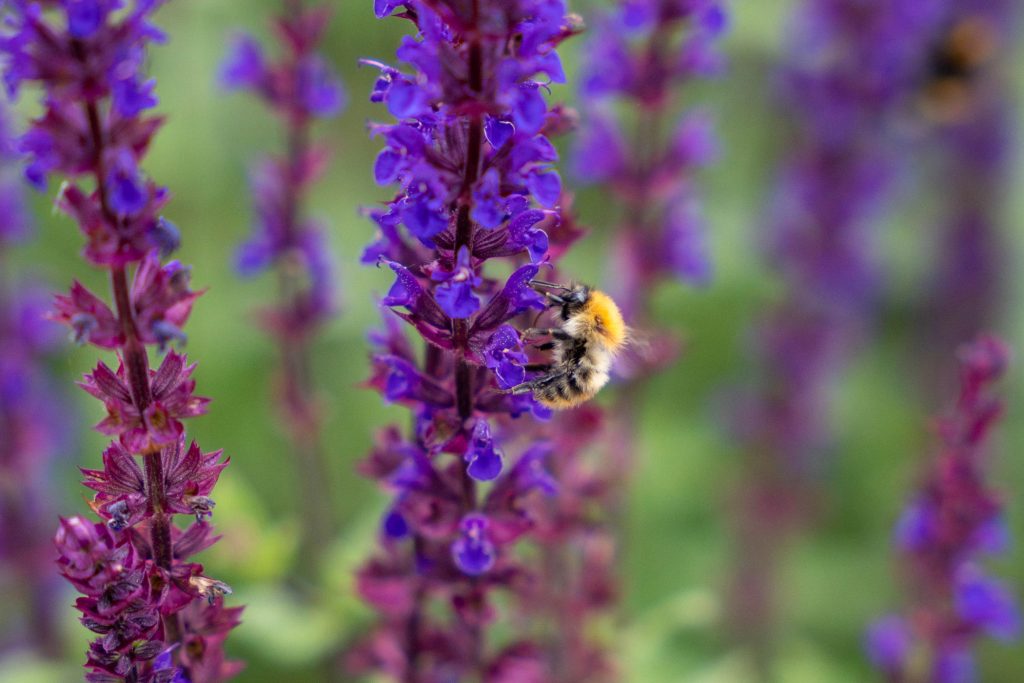
A varied planting mix provides food and habitat for insects and other wildlife, helping bring more biodiversity into built-up and urban environments.
Plants can help capture fine dust and airborne particles, bringing more natural greenery into busy commercial and urban settings.
Living walls add an extra layer of planting to the building, helping reduce heat gain in warmer weather and supporting insulation through colder months.
Living walls bring more planting into built-up areas, helping commercial and public spaces feel greener and more connected to the natural environment.
Living walls absorb and hold rainfall, releasing excess water more gradually and helping to reduce the immediate load on drainage systems.
On many commercial and urban sites, there simply isn’t much room at ground level.
Living walls use vertical space to introduce established planting without taking up valuable floor or ground area. They can work particularly well on buildings, courtyards and other hard-landscaped spaces where traditional planting is limited.
Businesses and developments are increasingly expected to create more space for nature.
Living walls can add varied planting and habitat to built-up sites, with plant choices tailored to the location and biodiversity goals. Where required, monitoring can also help measure the impact over time.
Urban greening is becoming a bigger consideration in the design and planning of new developments.
Living walls can form part of a wider green infrastructure strategy, particularly where space for planting is limited. We work with architects and project teams to look at the building, consider the different systems available and develop a solution that fits the site and wider scheme.
A lot of environmental improvements happen behind the scenes.
A living wall creates a visible green feature that staff, customers and visitors can see and experience, helping bring wider sustainability and greening commitments into the everyday environment.
Thinking about a living wall? We’ve answered the questions we’re asked most often. Can’t see your question? Get in touch and we’ll be happy to answer any queries you have.
We work with different systems depending on the building and the project. Modular living walls use individual planting cassettes, giving us flexibility with the layout and choice of plants. Pre-grown green façades use established hedge panels in planters, which can work particularly well on larger buildings.
We’ll look at the building structure, available space and planting requirements before recommending a system. You can find more technical information about both options in our downloads.
There isn’t a fixed cost for an external living wall. Price varies depending on the size of the wall, system, planting, access and installation requirements. We price each project individually, so the quotation reflects the site and the solution needed.
We work with architects, contractors and project teams to make sure the living wall fits with the wider build, from technical requirements and access through to installation timings and coordination with other trades.
Living walls are designed with long-term performance in mind. Planting, irrigation, monitoring and maintenance are considered from the outset, helping keep the wall healthy and identify issues early. Over time, individual plants or cassettes can also be replaced where needed without renewing the whole wall.
Most external living walls need a suitable water connection and power supply for the automated irrigation system. The irrigation delivers water and nutrients across the planting, with requirements such as pressure, flow rate and connection location depending on the system and scale of the wall.
Most external living walls need around four to six maintenance or inspection visits each year. The exact schedule depends on the size of the wall, planting, access and monitoring in place. Visits typically include plant care, pruning, nutrient and irrigation checks, replacement planting where needed and visual inspections to keep the wall performing well.
Planning permission is not usually required for a living wall. Listed buildings, conservation areas and other sensitive sites may need additional consent, so it’s worth checking with the local planning authority where there is any doubt.
Installation time depends mainly on the size of the wall, access and the complexity of the project. Smaller installations can be completed relatively quickly, while larger or more complex walls will take longer. We plan the installation around the wider project and agree timings in advance.
Explore our featured projects for inspiration on how a living wall could transform your space.
Technical specifications covering system dimensions, materials, weight, irrigation and installation requirements.
Further details on system construction, materials and applications.
Technical specifications covering planter dimensions, supporting structures, weight, irrigation and installation requirements.
Further details on system construction, materials and applications.
How DNA-based insect monitoring can help assess biodiversity around a living wall installation.
An example planting scheme showing the variety of species used in external living walls.
Tell us about your project and we’ll talk through the site, what you want to achieve and the practical next steps.