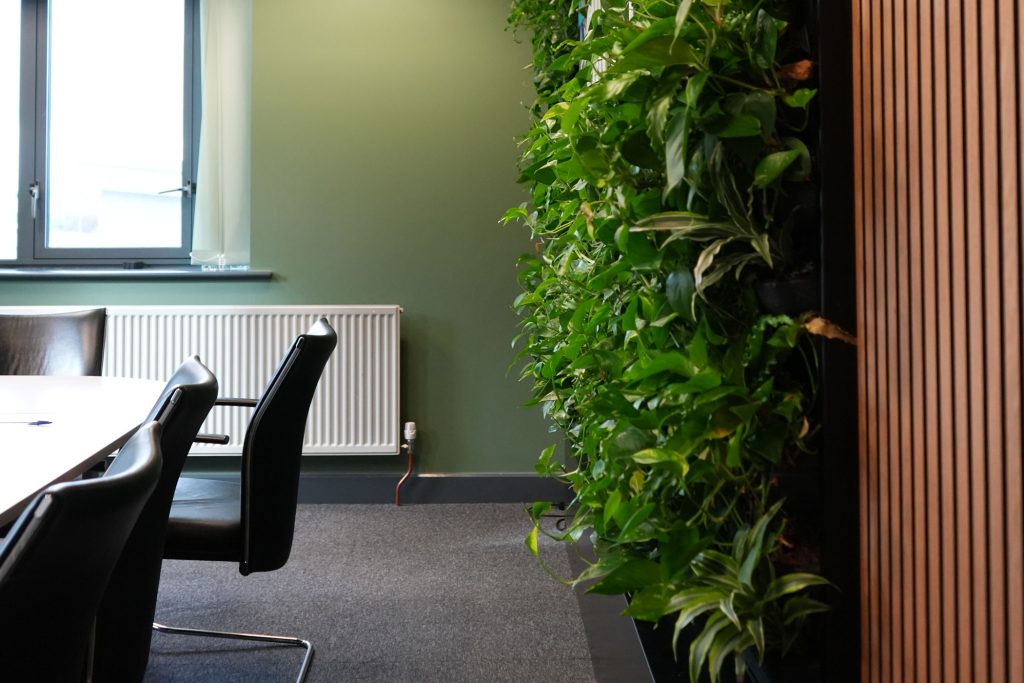
Internal living walls bring real planting into workplaces, hospitality, retail, education and other shared spaces, adding colour, texture and a stronger connection to nature. We look at the space itself first – the available light, how the area is used and what you want the wall to achieve.
From there, we shape the planting and system around the site, whether it’s a smaller feature wall or a larger installation. Irrigation, monitoring and ongoing maintenance are planned in from the start to help keep the wall healthy over time. For smaller spaces or projects that don’t need a full living wall, we can also provide LivePicture plant displays and freestanding LiveDivider systems.

Internal living walls bring a large area of real planting into a space, adding colour, texture and a natural focal point that becomes part of the wider interior design.
Bringing real planting into workplaces and shared spaces can help create a calmer, more welcoming environment and strengthen people’s everyday connection with nature.
Carefully selected indoor plants can help filter some airborne pollutants, supporting wider efforts to create a fresher, healthier indoor environment.
Planting and living wall systems can help absorb and disperse sound, making them a useful addition in offices, hospitality spaces and other busy interiors.
Living walls introduce substantial areas of planting vertically, bringing greenery into interiors without taking valuable floor space away from desks, seating, tables or circulation.
Living walls can incorporate signage or become a recognisable backdrop within a space, giving businesses a feature that works for customers, staff, photography and social content.
Indoor spaces can feel hard, artificial or removed from the natural environment.
Living walls bring a substantial area of real planting into the space, creating a stronger connection to nature and making greenery part of the wider interior design. They can be integrated into receptions, offices, hospitality spaces and other interiors rather than relying on standalone planting.
Busy interiors can sometimes feel hard, noisy or lacking in comfort.
Living walls bring real planting into the space, helping soften the surroundings and create a calmer, more comfortable environment. They can support wider wellbeing and biophilic design goals while adding colour, texture and a natural element to the interior.
There may be little room for substantial planting without sacrificing useful space.
Living walls use vertical surfaces to introduce a large amount of planting without taking up valuable floor area. That makes them particularly useful in offices, bars, restaurants, receptions and other spaces where seating, circulation and usable floor space need to be protected.
Many environmental initiatives happen behind the scenes and aren’t obvious to the people using the space.
A living wall creates a visible, everyday expression of a wider sustainability or biophilic design approach. It gives staff, customers and visitors something they can see and experience, helping make those commitments more tangible.
Where measuring indoor conditions is important, we can also provide air quality monitoring to track factors such as CO₂, airborne particles, temperature and humidity over time.
Thinking about a living wall for your home or business? We’ve answered the questions we’re asked most often below. Can’t see your question? Get in touch and we’ll be happy to answer any queries you have.
The cost depends on the size of the wall, the system used, access, irrigation requirements, lighting and the level of ongoing maintenance required. We design each wall around the space and the brief, so the best way to get an accurate cost is to talk us through the project and we can recommend the most suitable approach.
Yes. We recommend suitable LED lighting for all internal living walls to provide the plants with the light they need for healthy growth. The type and positioning of the lighting will depend on the space, planting and existing light levels. We don’t usually supply or install the lighting ourselves, but we can advise on the most suitable specification for the project.
Most of our internal living walls use automatic irrigation, so the plants receive water and nutrients without needing to be watered by hand.
Depending on the space, we can connect the system directly to a mains water supply or use a separate tank and pump. We’ll look at the options during the design stage and recommend what works best for the building.
Living walls need ongoing care to keep the planting healthy and the irrigation system working properly. This can include pruning, feeding, replacing plants where needed and checking irrigation. We offer ongoing maintenance as an optional service, although for smaller walls some clients choose to manage routine care themselves.
Yes. We can install a tank-fed irrigation system that stores water at the base of the wall and uses a pump and timer to water the plants automatically.
There’s no need for a permanent mains water or drainage connection, just an electrical supply. The tank typically holds enough water for around 4–6 weeks before it needs refilling, making it a practical option for spaces where connecting to existing plumbing would be difficult.
Yes, depending on the project. The modular nature of the system gives a lot of flexibility around different wall sizes, layouts and more bespoke installations. Living walls can also be designed as freestanding features in some spaces. We would look at the structure, access, irrigation and lighting requirements before recommending the best approach.
There isn’t one standard planting mix. Plant choice depends on the conditions within the space, including light levels, temperature, air conditioning and the overall design brief. We develop the planting scheme around those conditions and advise on the LED lighting needed to support healthy growth.
Explore our latest projects for inspiration on how a living wall could transform your space.
Dimensions, planting options and installation details for framed indoor plant displays.
Specifications for freestanding planted room dividers, including dimensions and water requirements.
Living Walls UK’s system specifications, irrigation options and installation requirements.
Tell us about your space, what you want to achieve and any practical considerations. We’ll talk through the options and recommend the best approach for your project.